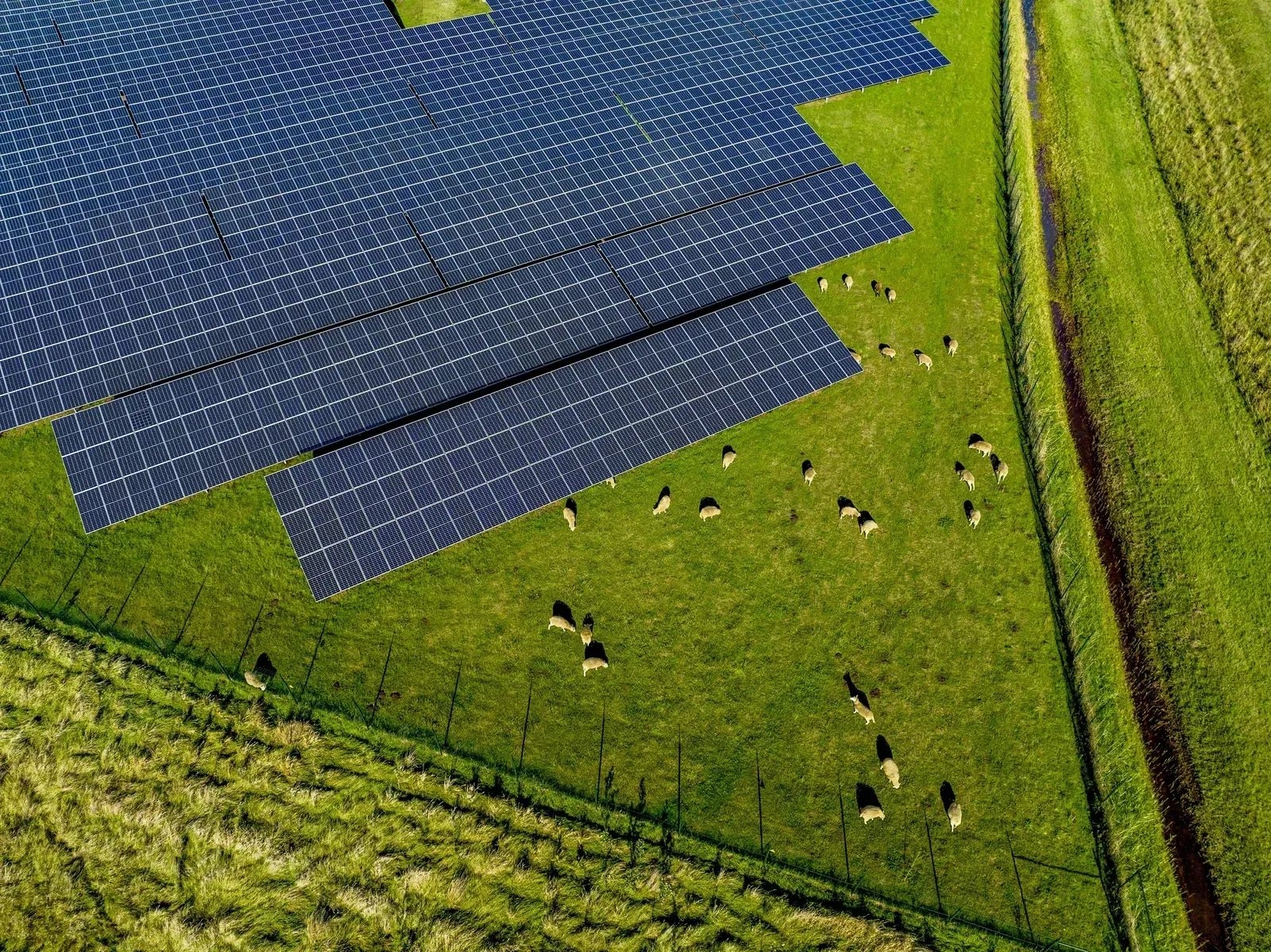
Elevated racking by clearance requirement
Racking here is sourced by the actual clearance a site needs, whether that's enough height for tractor equipment to pass under or the wider row spacing crop operations require.
 business
Industries
Elevated and wide-span racking systems built for dual-use land, sourced by clearance height and row spacing, not standard ground-mount specs.
Talk to our team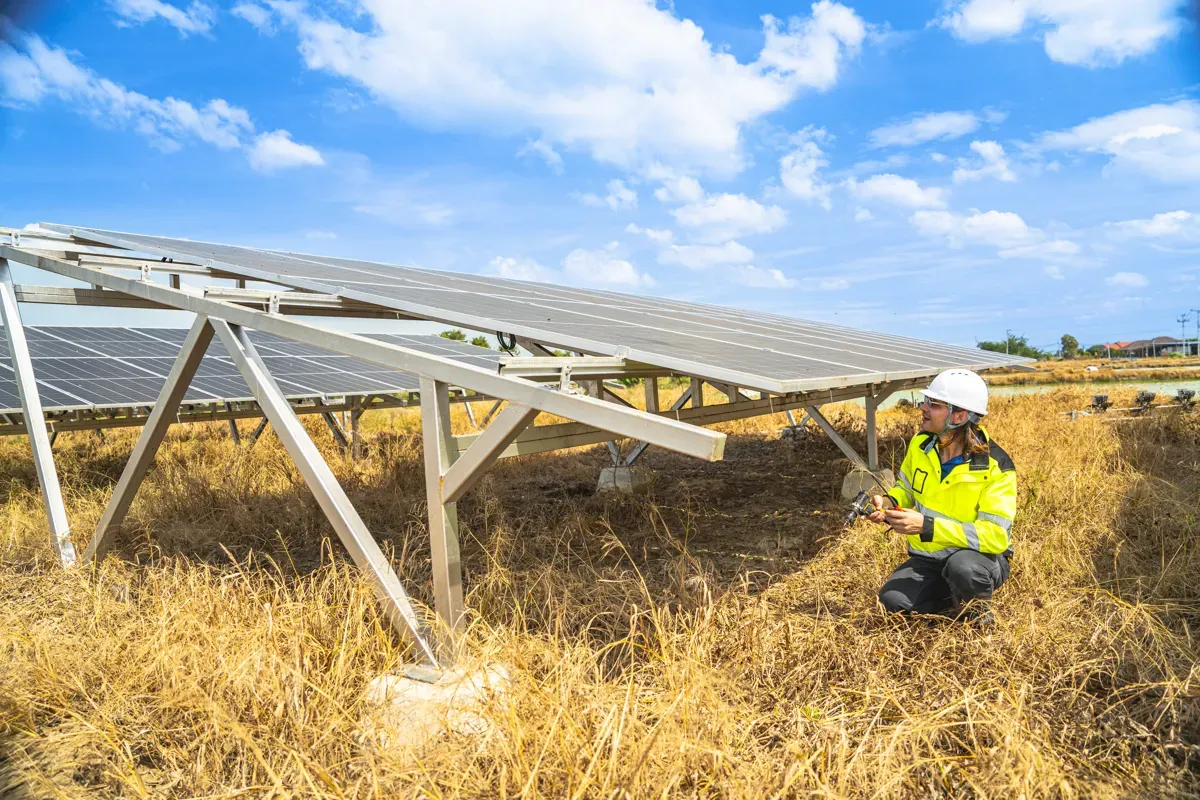
Source elevated and wide-span racking for agrivoltaic sites, sized by clearance and row spacing for farming equipment or livestock underneath.
Racking here is sourced by the actual clearance a site needs, whether that's enough height for tractor equipment to pass under or the wider row spacing crop operations require.
Vertical bifacial racking, which captures light from both sides of the module in narrow rows, is an increasingly common alternative for sites that want to keep more ground in continuous crop production.
Elevated structures carry different wind loading than low ground-mount racking, and structural ratings here account for that difference rather than reusing a standard ground-mount spec.
Clearance gets specified against real farm equipment dimensions before a rack goes up too low to use.
Sites that need more continuous crop rows get a real alternative to elevated horizontal racking.
Clearance is set by the equipment and activity underneath, not a fixed number. Grazing and small implements may work with a few feet of clearance, while planting, harvesting, and larger machinery often push required clearance well higher, sometimes past eight to fourteen feet. Source elevated racking by the actual under-panel activity and equipment envelope rather than to a standard ground-mount height.
Vertical bifacial mounts double-sided modules upright in rows, so panels stand vertical rather than tilted. Because the array leaves the ground mostly open between rows, it makes sense where crop continuity and machinery access matter more than peak per-module yield. It also shifts generation toward morning and evening, which can complement afternoon-heavy demand.
Generally yes, because elevated and wide-span structures carry more steel, deeper foundations, and higher wind and load engineering than standard ground-mount. The premium is driven by clearance height, row spacing, and site conditions rather than a flat markup. Sourcing by clearance and span, instead of defaulting to ground-mount specs, keeps you from over- or under-building the structure.