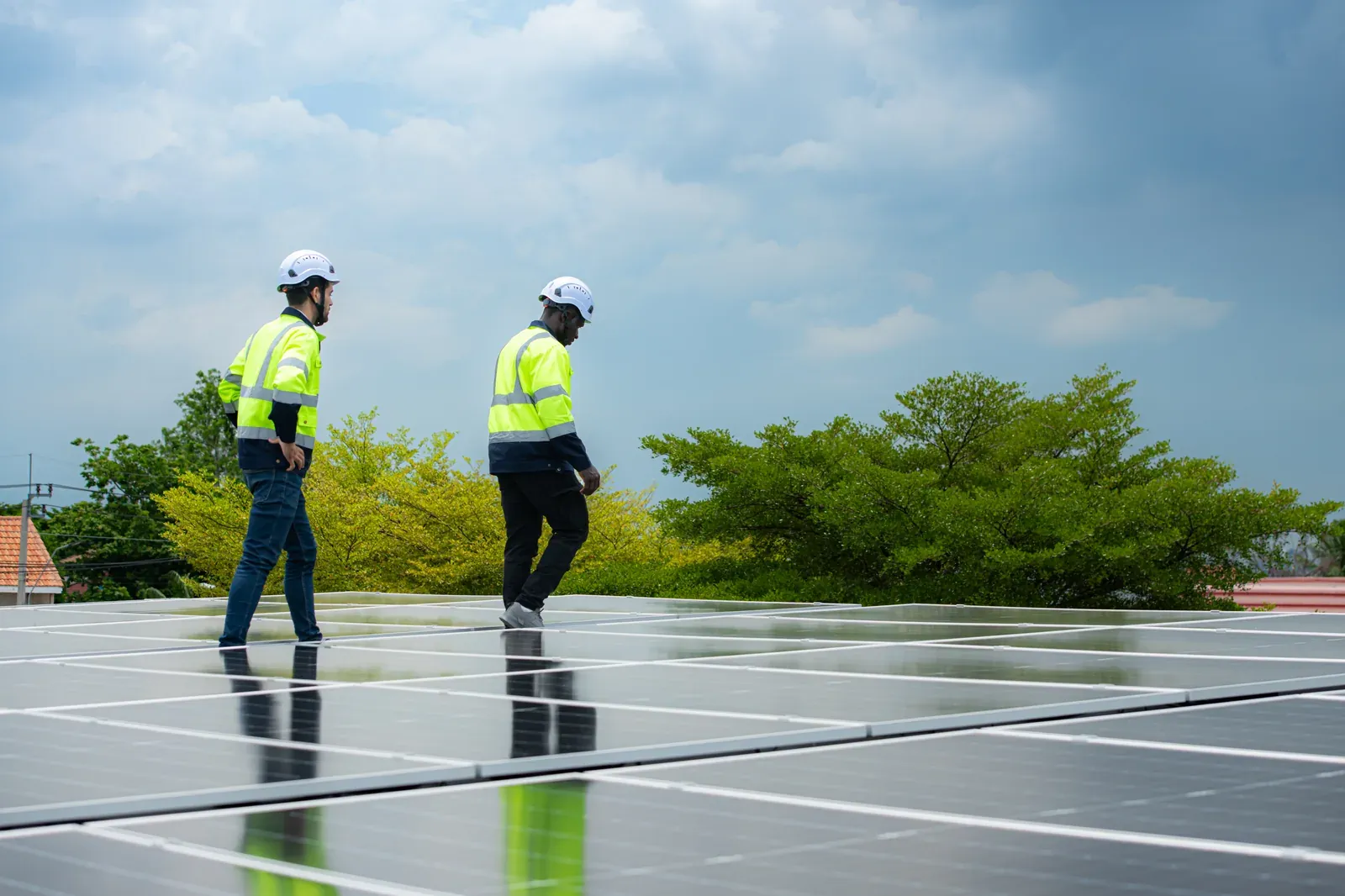
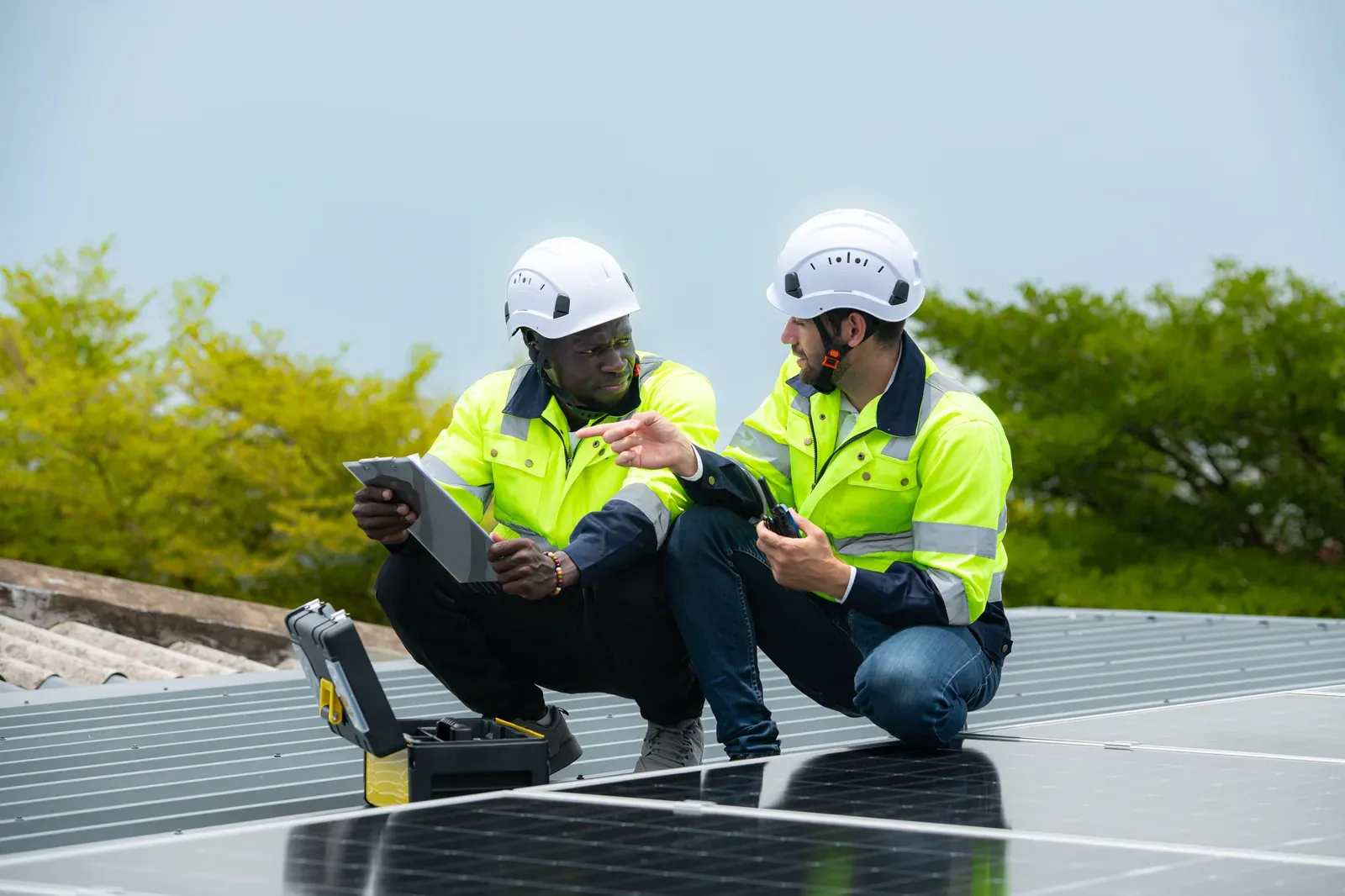
Source ballasted and attached racking for flat commercial roofs. Racking sized to membrane type and structural loading, sourced on Sunhub.
Flat-roof racking by roof condition
Ballasted versus attached, by roof condition
Ballasted racking avoids membrane penetrations and suits most TPO and EPDM roofs, while attached racking makes sense where wind exposure or roof age calls for a mechanically fastened system. Sourcing here compares both by the specific roof, not by habit.
Structural loading checked against the roof
Ballast weight and attachment loads get checked against the roof's actual structural capacity, which is what keeps a racking choice from triggering an unplanned structural reinforcement.
Bifacial-ready racking for reflective roofs
Light-colored TPO membranes reflect enough light to make bifacial modules worth the incremental cost, and racking here can be sourced with the tilt and ground clearance bifacial performance depends on.
What changes on a flat-roof install
Match racking type to the actual roof membrane
Ballasted or attached gets decided by membrane and structural capacity before installation, not after a leak.
Capture bifacial gains where the roof supports it
Reflective roof surfaces get matched to racking that's actually built to take advantage of them.
FAQs
What's the difference between ballasted and attached flat-roof racking?
Ballasted racking holds the array down with concrete blocks or weighted trays and typically needs no roof penetrations, which suits many membrane roofs. Attached racking anchors mechanically into the roof structure, adding uplift resistance where wind loads or roof loading limits rule out ballast. The right choice depends on the roof's load capacity, membrane, and site wind zone, so Sunhub selects by roof condition rather than defaulting to one system.
Does a TPO roof need different racking than a built-up roof?
Often yes, because the racking has to protect the membrane it sits on. TPO and other single-ply membranes usually call for protective slip sheets or pads under ballast trays and careful attachment detailing, while built-up roofs handle contact differently. Matching the racking and its interface to the actual membrane type helps preserve the roof warranty, which is why Sunhub matches the system to the membrane rather than the catalog.
How does bifacial racking affect flat-roof albedo and yield?
Bifacial modules capture reflected light on the back side, so a high-albedo roof surface such as white TPO can add meaningful rear-side yield. Racking that tilts and elevates the modules increases the reflected light reaching the back, improving the bifacial gain. Actual uplift depends on roof reflectivity, tilt, and row spacing, so we spec bifacial-ready racking only where the roof surface and layout actually support the gain.