
Industries
EV infrastructure & fleet
Level 2 and DC fast charging equipment for fleet, workplace and highway corridor sites, sourced against service capacity and NEVI funding requirements.
Talk to our team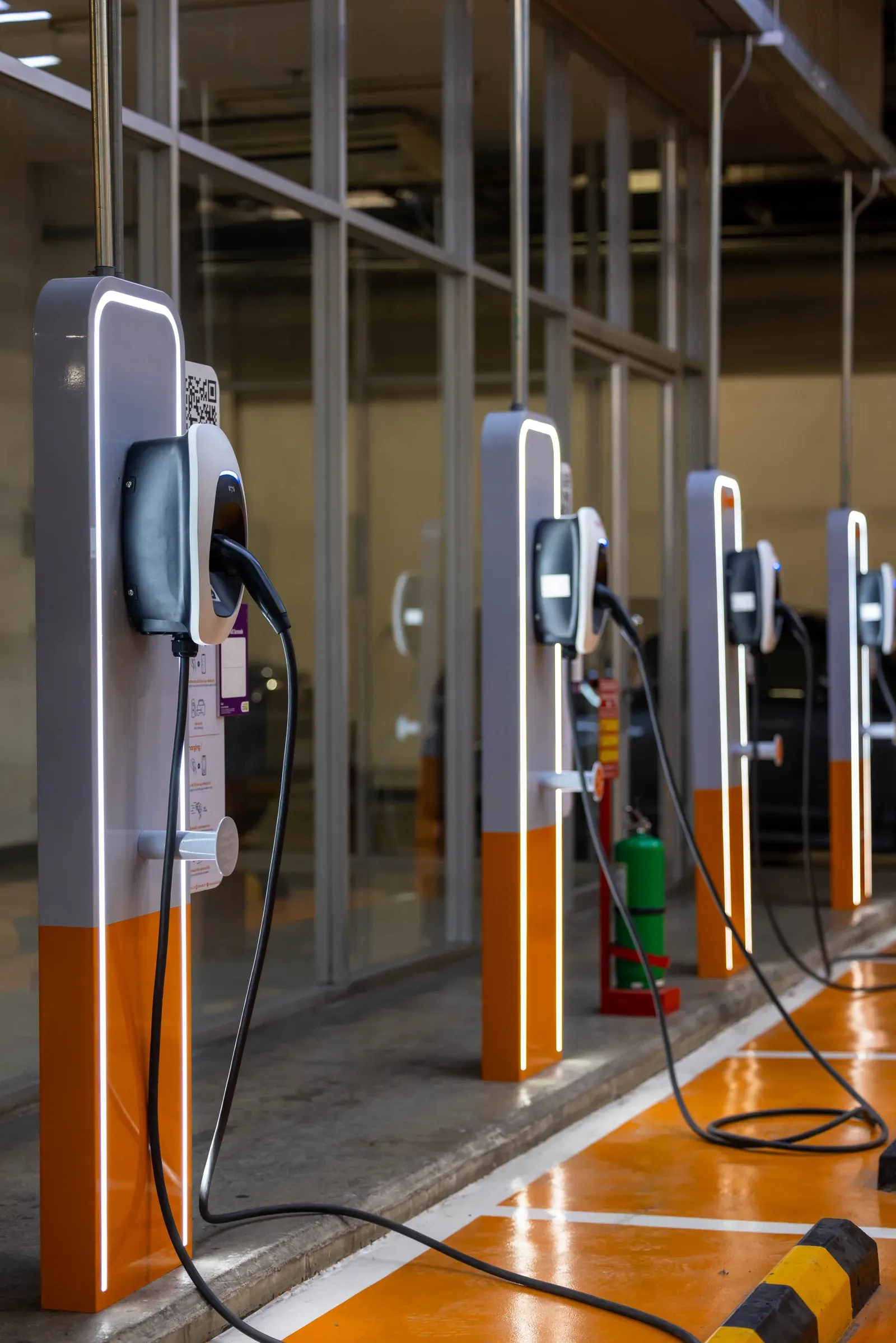
EV Infrastructure
Level 2 and DCFC charging at scale.
Designed for your business
CPOs · Fleet operators · Site hosts
Stack PV and EV incentives
Reduce demand-charge exposure
Charging equipment matched to site type
Charging equipment matched to site type
Fleet depots and workplace sites, where vehicles sit for hours, are usually best served by Level 2 charging, while highway corridor and quick-turn commercial sites need DC fast charging output. Sourcing separates equipment by that use case.
NEVI-aware sourcing for corridor sites
Federally funded NEVI corridor sites carry minimum uptime and output requirements, and increasingly a domestic-sourcing threshold, and listings here are flagged against those requirements before a site gets built to a spec that doesn't qualify.
Solar-plus-charging site design
Combined sites need array output, storage and charger demand sized together, not as three separate purchases that happen to share a meter.
What changes on a charging site
Right-size the site to its actual use case
Charger type and count match to dwell time and traffic pattern instead of a one-size deployment.
Stay eligible for NEVI funding
Uptime, output and sourcing requirements are visible on the listing before a site gets built around equipment that doesn't qualify.
FAQs
What's the difference between Level 2 and DC fast charging for fleet sites?
Level 2 charging runs on AC at typical rates that replenish a vehicle over several hours, which suits depots where fleet vehicles sit overnight. DC fast charging delivers much higher power for rapid turnaround, better for corridor stops and vehicles that cannot dwell. Fleet sites often mix both, using Level 2 for overnight parking and DC fast for quick top-ups, and the split depends on duty cycles and available service capacity.
Do NEVI-funded corridor sites have minimum equipment requirements?
Yes. NEVI-funded corridor sites carry federal minimums, generally including DC fast chargers of a specified minimum power, a set number of ports per site, defined spacing along the corridor, and uptime and networking standards. Exact requirements come from the NEVI program and your state DOT, so sourcing should be checked against the current rules for your build. Sunhub sources equipment with those criteria in mind to help keep sites eligible.
Can EV charging equipment be paired with an on-site solar array?
Yes. On-site solar can offset charging load and demand charges, and is commonly paired with chargers, often alongside battery storage to manage peaks and provide resilience. The array and chargers are typically integrated through switchgear and site design rather than wired directly together. Sunhub can source both the charging equipment and the solar and storage components as part of one site design.