Products
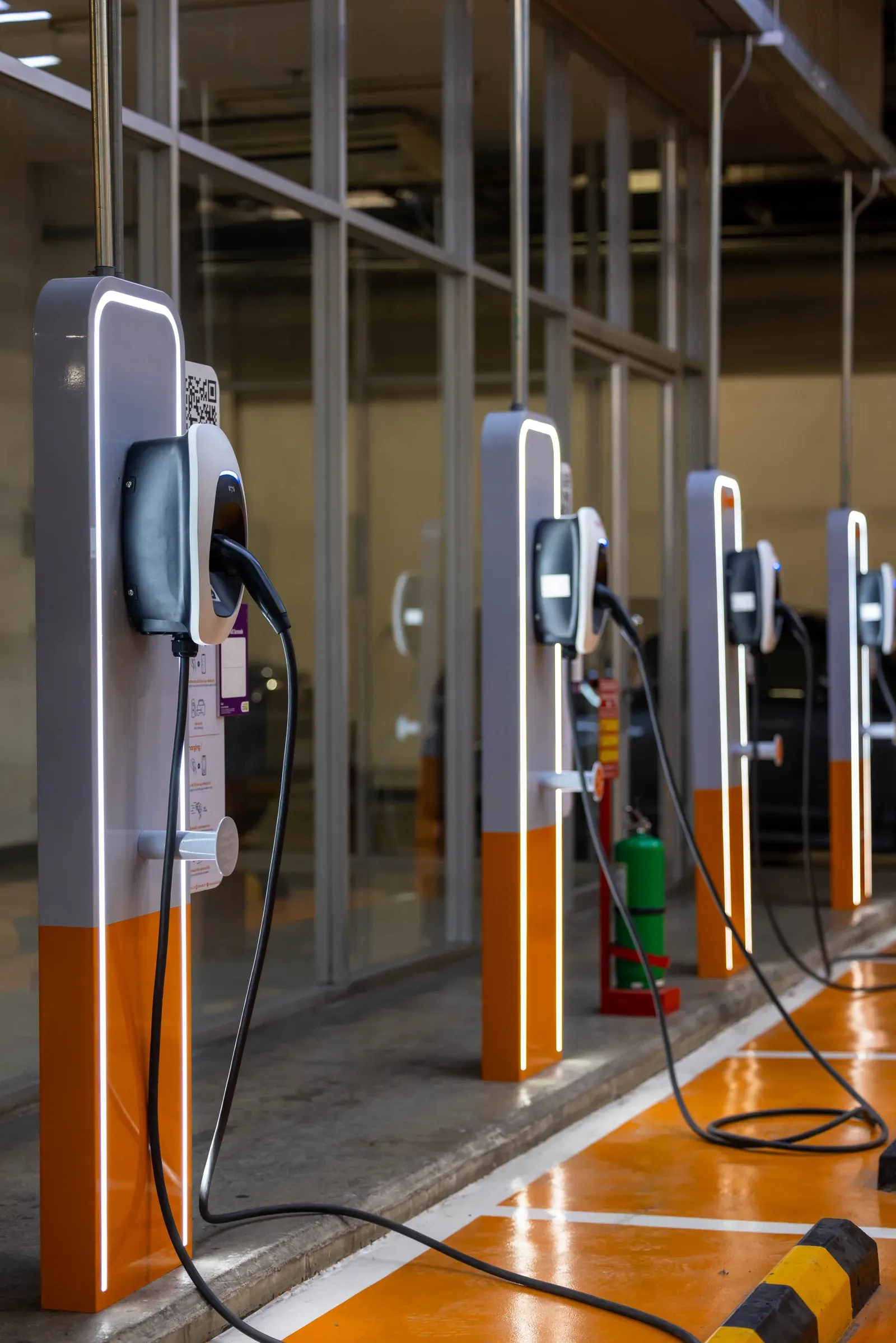
EV chargers
Level 2 and DC fast charging hardware, matched to service capacity and NEVI-funded site requirements.
Talk to our teamEV Chargers
Level 2 and Level 3 DCFC.
Designed for your business
Electricians · CPOs · Fleet operators
Compress site activation time
Stack utility incentives
Level 2, DC fast and NEVI
Level 2 versus DC fast charging, by use case
Level 2 chargers fit fleet depots, workplace and multifamily deployments where dwell time is long, while DC fast charging fits highway corridor and quick-turn commercial sites. The guide compares output, uptime specifications and connector standards by deployment type.
Matched to available service capacity
A DC fast charging site is as much an electrical service and demand-charge question as a charger question, and the guide walks through how charger count and output map to transformer and panel capacity. That match keeps a site from needing a costly utility upgrade mid-project.
NEVI and incentive-aware sourcing
Federally funded NEVI corridor sites carry minimum uptime, output and, increasingly, domestic-sourcing requirements, and listings are flagged against those requirements. The same applies to chargers qualifying toward Section 30C credit eligibility windows.
Right-size and stay incentive-eligible
Right-size the site, not just the charger
Charger count and output get matched to actual service capacity before a utility interconnection surprise shows up mid-build.
Stay eligible for the incentive you're chasing
NEVI and tax-credit eligibility requirements are visible on the listing instead of buried in a separate compliance document.
Pair chargers with the solar array powering them
Charger load profiles and solar production data source from the same bill of materials when a site combines both.
Charging shares the solar meter
EV charging increasingly shares the meter with solar
Combined solar-plus-EV sites need coordinated sizing between array output, storage and charger demand. Cross-check the batteries and BOS guides when a project pairs charging with an on-site array.
FAQs
What's the difference between Level 2 and DC fast charging?
Level 2 chargers run on 208 to 240V AC and typically deliver tens of miles of range per hour, which suits workplaces, multifamily, and overnight dwell time. DC fast chargers convert power on-site and can add substantial range in well under an hour, but draw far more service capacity and cost more. The right choice depends on how long vehicles sit at the site.
How many EV chargers can a site's electrical service support?
It depends on the available service capacity, the load per charger, and how much of the panel is already committed to other loads. A DC fast charger can consume as much as a small building, so counts are limited more by service size than by physical space. Sunhub sizes the charger mix to the site rather than just the charger, and load management can stretch capacity further.
Do EV chargers need to meet NEVI requirements to qualify for funding?
For NEVI-funded projects, yes. Federal NEVI funding carries specific requirements around power levels, connector types, uptime, and networking, and hardware that misses them can disqualify the site. Requirements can shift, so confirm the current program terms for your state. Sunhub sources with those incentive requirements in mind so you stay eligible for the funding you are chasing.