Pile design matched to tracker foundations
Driven-pile design ties directly to the tracker system a project is using, since pile embedment, spacing and reveal height are foundation specs a tracker OEM sets, not a generic civil default.
 business
Industries
Site civil and geotechnical scope for utility-scale solar, from pile design to load-tested foundations, sourced alongside the equipment it supports.
Talk to our team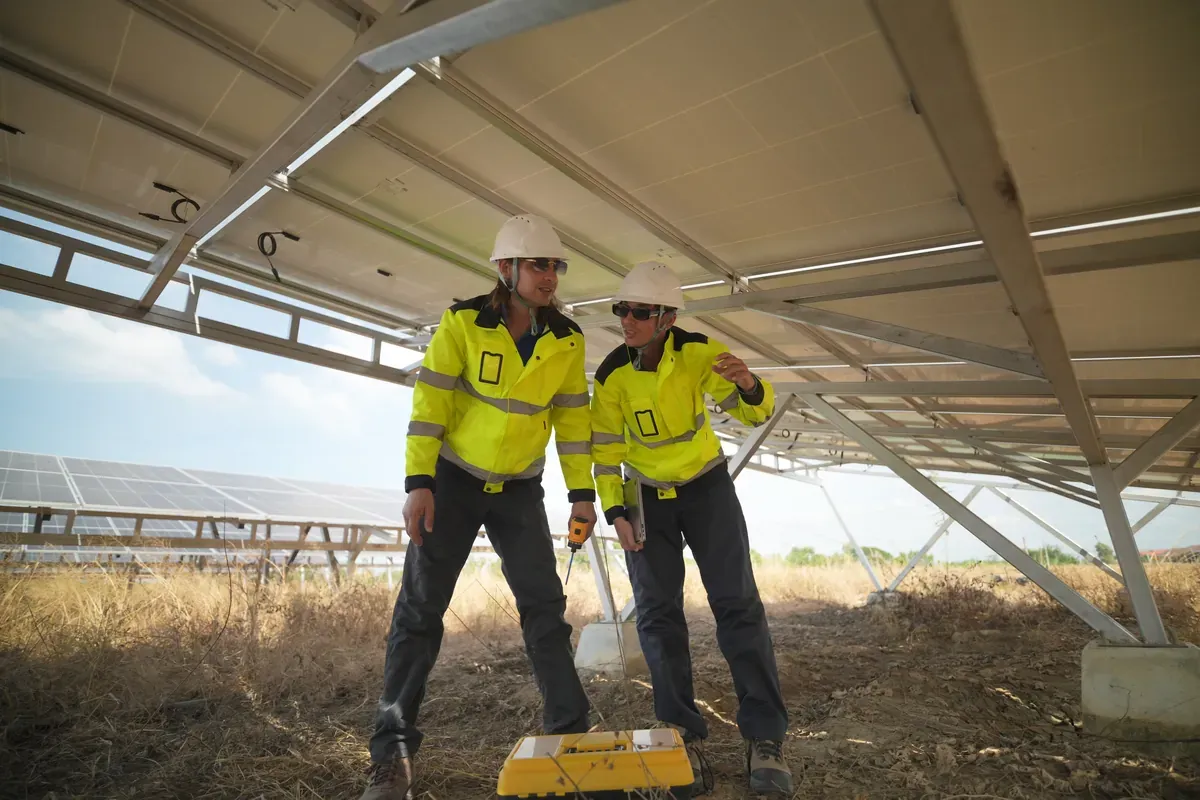
Source pile design, foundation testing and civil scope for utility-scale solar sites. Geotechnical sourcing structured around tracker and BOP requirements.
Driven-pile design ties directly to the tracker system a project is using, since pile embedment, spacing and reveal height are foundation specs a tracker OEM sets, not a generic civil default.
Pile load testing on a representative sample verifies capacity before a project commits to full-site pile driving, catching a soil-condition surprise before it becomes a change order across thousands of piles.
Grading, access roads and drainage get sourced and sequenced alongside tracker and BOS delivery, since civil work usually has to finish ahead of racking installation, not in parallel with it.
Load testing verifies pile capacity on a small sample before full-site driving is underway.
Civil scope gets planned against the construction schedule instead of becoming the bottleneck that delays tracker installation.
Foundation and pile design depend directly on the tracker system and the soil it sits in, so sourcing them together keeps the civil scope matched to the equipment it supports. Splitting them risks mismatched pile specs, resequenced work, and rework. Bundling civil into the same procurement keeps the foundation, racking, and mounting decisions consistent.
Load testing confirms that piles can carry the design loads the trackers impose, typically checking lateral, axial, and uplift capacity against the geotechnical assumptions. It validates embedment depth and soil behavior before you mobilize the full crew and commit to a pile schedule. Catching a shortfall at the test stage is far cheaper than discovering it mid-installation.
Tracker foundation design sets the pile size, spacing, and embedment, and site civil work has to deliver grading and soil conditions that support those piles. Geotechnical findings can push the foundation design toward deeper piles or different footings, so the two are worked out together. Sequencing civil ahead of racking keeps the foundation ready before mounting begins.