Allocation across the major tracker OEMs
Direct access to allocation across the leading single-axis tracker manufacturers, benchmarked on delivered dollar-per-watt against current market rather than negotiating from a single vendor's list price.
 business
Industries
Single-axis tracker procurement benchmarked against current delivered dollar-per-watt, sourced across every major OEM rather than one preferred vendor.
Talk to our team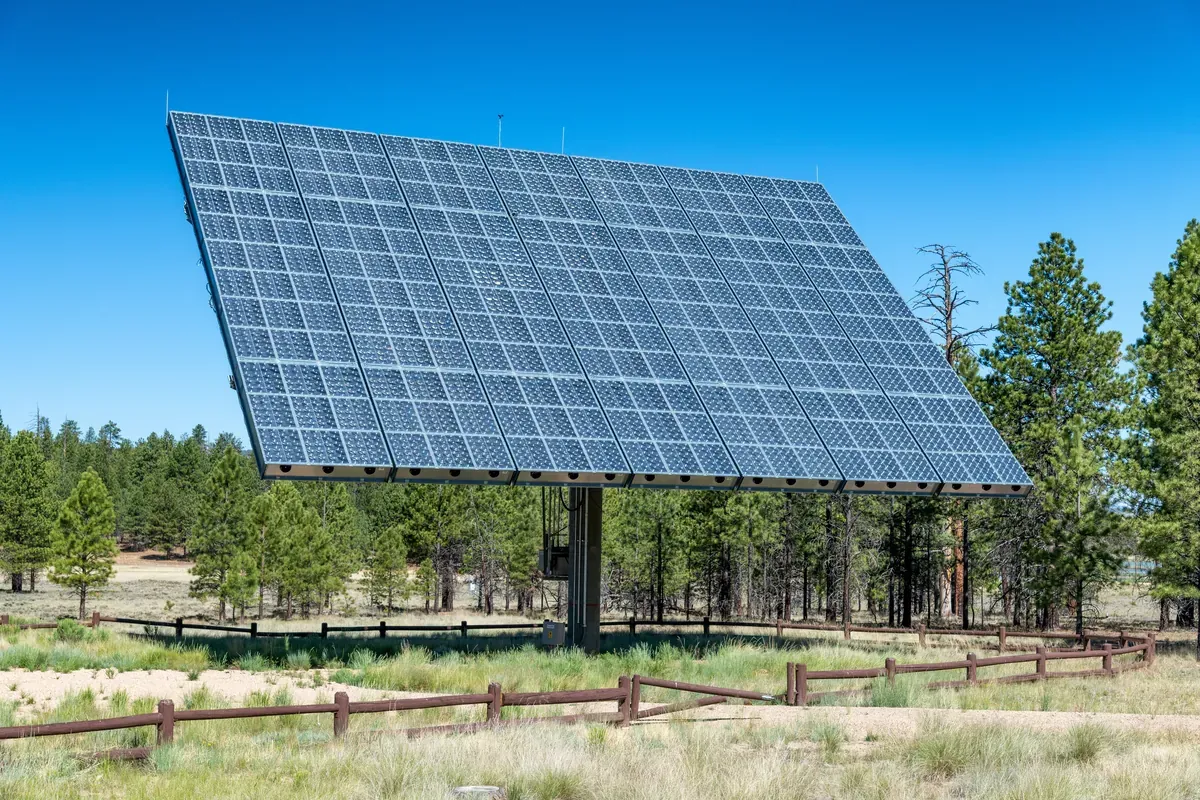
Source single-axis trackers across major OEMs with delivered $/W benchmarking. Utility-scale tracker procurement structured around COD timelines on Sunhub.
Direct access to allocation across the leading single-axis tracker manufacturers, benchmarked on delivered dollar-per-watt against current market rather than negotiating from a single vendor's list price.
Single-axis trackers typically deliver a meaningful energy yield gain per acre over fixed-tilt racking, and this guide covers where that yield gain clears the added mechanical cost and where fixed-tilt still wins on simpler sites.
Tracker choice sets the pile embedment, spacing and reveal-height requirements civil design has to build around, so tracker OEM selection and foundation design get sourced as one decision, not two sequential ones.
Tracker steel and component sourcing varies by OEM, and domestic-content bonus eligibility gets checked against the specific tracker line a project is speccing, not assumed across the category.
Delivered dollar-per-watt gets compared across the major tracker manufacturers instead of anchored to a single vendor relationship.
Tracker delivery gets sequenced against the project's actual commercial operation date, not a vendor's general production queue.
Civil design accounts for the specific tracker OEM's foundation requirements before piles are ordered, not after a mismatch surfaces on site.
Single-axis trackers follow the sun through the day, raising annual energy yield over fixed-tilt by a meaningful margin in most high-irradiance regions. That production gain typically outweighs the added equipment and maintenance cost at utility scale, improving the project's levelized cost of energy. Fixed-tilt still wins on some sites with difficult terrain, high wind, or tight budgets, so the choice is a project-by-project economic call.
Enough to matter at scale, since trackers are one of the larger balance-of-system line items and OEM pricing, lead time, and domestic content status vary widely. On a multi-megawatt project even a small per-watt delta compounds into real dollars, and the delivered number depends on freight and foundation interaction, not just the sticker price. Sunhub benchmarks tracker pricing across major OEMs rather than against a single quote.
Yes. Each tracker system specifies its own pile embedment, spacing, and pier loads, and those requirements interact with the site's soil conditions and geotechnical results. Switching OEMs late can force a foundation redesign, which is why aligning tracker selection and foundation engineering early avoids rework. We help get those two decisions coordinated from the start rather than sequentially.